

Ever wondered if your entrepreneurial mindset is strong enough when you’re staring at your computer with a sleeping baby on your chest? Despite running successful businesses, many of us mothers question if we’re “real entrepreneurs” at all.
I used to think imposter syndrome was something that would disappear once I achieved certain milestones in my business. In reality, success often amplified those feelings of self-doubt. As a mother entrepreneur, I’ve learned that balancing client calls with school pickups doesn’t make me less legitimate than other business owners. Yet that voice still whispers: “You’re just playing business while real entrepreneurs are working 24/7.”
The truth is, successful entrepreneurs—especially solo entrepreneurs—experience imposter syndrome at alarming rates. When motherhood enters the equation, those feelings can intensify tenfold. However, the entrepreneurial journey isn’t about eliminating self-doubt completely. Instead, it’s about building the mental resilience to acknowledge those feelings without letting them control your actions or define your worth.
This guide isn’t about eliminating your imposter syndrome overnight. Rather, it’s about recognizing it, understanding its unique impact on moms in business, and developing practical strategies to move forward despite those nagging doubts.
Why Imposter Syndrome Hits Mumpreneurs Hard
Mompreneurs experience imposter syndrome more intensely than almost any other entrepreneurial group for reasons that go beyond typical business challenges. The unique combination of business ownership and motherhood creates the perfect storm for self-doubt to flourish, even among the most capable women.
Balancing business and motherhood
The juggling act between entrepreneurship and motherhood creates unrelenting pressure. Mumpreneurs face impossible standards – they must excel at running a business yet simultaneously prepare nutritious meals, maintain romantic relationships, be present for their children, exercise regularly, and somehow maintain a social life. This constant balancing act becomes a breeding ground for self-doubt.
Guilt emerges as a particularly potent trigger for imposter feelings. Many mother entrepreneurs report being trapped in a guilt cycle – feeling guilty about neglecting their business when focusing on family, then equally guilty about neglecting family when working on their business. This double-bind fuels the internal question: “Why am I taking time away from my family for this business I’m not even successful at?”
The constant time constraints further complicate matters. With limited hours to divide between family responsibilities and business growth, many mumpreneurs struggle to find moments for self-care or personal time. Additionally, the financial pressures of launching and scaling a business combined with family expenses create another layer of stress that can undermine confidence.
The hidden emotional labor
Beyond visible work lies an invisible burden that disproportionately falls on women entrepreneurs with children – emotional labor. This hidden work comes in three overlapping categories that drain mental energy:
-
Cognitive labor: The constant mental planning, organizing, and anticipating of family needs
-
Emotional labor: Managing everyone else’s feelings while suppressing your own stress
-
Mental load: The intersection where you’re preparing for everything both emotional and practical
This invisible work follows mompreneurs everywhere. Research shows women are more likely to worry about childcare even when not physically with their children. This creates a constant background thread that brings family concerns into work life – what one expert calls “always trying to mitigate future risk.” Furthermore, mothers are consistently more stressed, tired, and less happy than fathers, partly because mothers handle more of the invisible mental workload [1].
For entrepreneurs specifically, this emotional labor involves projecting constant optimism and strength even during setbacks, putting team and client needs first despite personal exhaustion, and maintaining high morale regardless of internal struggles [2].
Why high achievers feel it more
The entrepreneurial mindset often contains perfectionist tendencies that make imposter syndrome particularly potent. Research reveals that 62% of entrepreneurs experience depression at least once weekly [2], creating fertile ground for self-doubt.
High achievers are particularly vulnerable to imposter feelings. Studies indicate 25-30% of high achievers experience impostor syndrome regularly [3]. When surveying high-achieving mothers specifically, that number jumps to approximately 50% reporting impostor feelings around their mothering abilities [3].
The perfectionist standards many successful entrepreneurs apply to their businesses extend to motherhood, creating impossible benchmarks. Among high-achieving mothers, 78% felt strongly they had to consistently “get it right” as parents, while 58% reported feeling disappointed with what they’d done for their children [3].
Additionally, for many accomplished women, self-worth becomes intertwined with professional achievement, making motherhood’s unpredictable challenges particularly threatening to identity and confidence. The intersection of ambition, success, and motherhood creates a complex emotional dynamic where triumph in one domain is expected to translate seamlessly to victory in all others.
The Social Media Illusion
Social media has completely changed how motherhood and entrepreneurship are portrayed online. As mother entrepreneurs juggle business demands with family responsibilities, the constant stream of seemingly perfect images can silently erode your confidence and amplify imposter syndrome.
How curated content fuels self-doubt
Open any social media app and you’ll find a parade of meticulously styled business owners with clean countertops, well-behaved children, and supposedly thriving businesses. This isn’t accidental—it’s carefully curated content designed to present an idealized version of entrepreneurial motherhood.
Research published in “Computers in Human Behavior” confirmed that exposure to idealized motherhood images increases anxiety and envy while putting additional pressure on your mental health [4]. What’s particularly concerning is that these negative effects occur whether the content comes from famous influencers or everyday moms in your network [4].
Essentially, the algorithm constantly serves you images of achievement and perfection with no context, creating a distorted reality that heightens feelings of inadequacy. For mother entrepreneurs specifically, this creates a toxic double-whammy: questioning both your parenting abilities and your business acumen simultaneously.
The danger of constant comparison
The comparison trap is particularly damaging for those developing an entrepreneurial mindset. Almost involuntarily, you begin measuring your messy, behind-the-scenes reality against someone else’s highlight reel.
Social comparison theory explains that we’re naturally driven to evaluate ourselves by comparing to others [5]. Unfortunately, social media facilitates primarily upward comparisons—measuring yourself against those who appear “superior”—which consistently undermines confidence [5].
One researcher summarized it perfectly: “The reason we struggle with insecurity is because we compare our behind-the-scenes with everyone else’s highlight reel” [6]. This phenomenon affects all entrepreneurs but proves particularly harmful to mothers during vulnerable transitions like launching businesses alongside raising children.
The constant exposure to curated content triggers a dangerous loop: scrolling increases comparison, comparison erodes confidence, and diminished confidence sabotages business growth. As one entrepreneur noted: “It has an emotional impact—it’s not a natural medium and the feedback you get is quite distorted” [7].

What you don’t see behind the scenes
The most damaging aspect of the social media illusion is what remains hidden from view. Behind those perfect posts usually lies:
-
Unseen struggles with childcare, sleep deprivation, and relationship strain
-
Financial pressures and business setbacks
-
Emotional exhaustion and moments of self-doubt
-
Teams of people helping (photographers, assistants, childcare)
One entrepreneur confessed: “It’s really overwhelming—the highs and the lows” [7]. Yet in their public persona, successful entrepreneurs rarely show vulnerability. The pressure to maintain a perfect image becomes another source of stress, creating what one researcher calls “the perfection illusion” [8].
As mothers with entrepreneurial ambitions, we often view these idealized images and conclude everyone else “has it going on” [6]. In truth, we’re seeing a highly selective portrayal that omits the mundane, messy reality of building businesses while raising families.
Remember this next time you’re scrolling: studies show people naturally overestimate the positives in others’ lives while failing to detect negative emotions [6]. The seemingly perfect mother entrepreneur in your feed likely faces similar challenges—she’s just not posting about them.
8 Mindset Shifts to Beat Imposter Syndrome
Developing a strong entrepreneurial mindset involves making strategic shifts in how you think about yourself and your capabilities. These eight mindset shifts will help you combat imposter syndrome and build the confidence needed to thrive as a mother entrepreneur.
1. Your lived experience is your qualification
Nobody has walked in your shoes. Your unique combination of education, whether formal or through lived experiences, is one-of-a-kind. This distinctive perspective qualifies you to be exactly where you are right now. Your journey—complete with its challenges and triumphs—has prepared you for this entrepreneurial path.
2. If not you, then who?
Seriously, who has a better idea than you? While many people sit around contemplating what to do next, you can be the person who takes action. The sense of accomplishment after completing something will fuel your confidence and silence that doubtful inner voice.
3. Growth is more important than perfection
Perfectionism can be a major obstacle to business growth. The hard truth: trying to make everything perfect leads to fewer results, not better ones. Shift your focus from flawless execution to consistent improvement. Each stumble becomes merely a step forward in your entrepreneurial journey.
4. Confidence comes with action
Take action first, even before you feel ready. Begin portraying confidence until it naturally emerges. With every imperfect action, you gain clarity and momentum. This “fake it until you make it” approach gradually transforms into authentic self-assurance as your habits become your natural way of thinking.
5. No one sees your self-doubt
That nervous feeling before a client pitch or important meeting? No one knows it exists except you! Others cannot detect your internal uncertainty unless you explicitly reveal it. Moreover, once you mention nervousness, people start looking for signs of it rather than focusing on your message or qualifications.
6. Talk about your wins—big and small
Start tracking your small wins—those tiny moments proving you’re moving forward. Research shows that recognizing achievements releases “feel good” chemicals in your brain including serotonin and dopamine, creating a positive feedback loop that drives continued progress [9]. This simple practice can transform your entrepreneurial outlook.
7. Share your journey, not just the results
Document your entrepreneurial journey authentically. When you share both struggles and victories, you build genuine connections with your audience. This transparency not only helps others feel seen and understood but also reinforces your own growth narrative. As one successful entrepreneur noted, this approach creates “bridges to genuine connections” [10].
8. Celebrate progress, not just outcomes
If you wait only for momentous occasions to celebrate, you might wait a long time. Focus on small, incremental wins to sustain joy over time. Studies indicate teams celebrating small wins have 31% higher productivity [11], proving that acknowledging progress isn’t just good for morale—it’s good for business too.
How Imposter Syndrome Affects Your Business
Imposter syndrome isn’t just an emotional burden—it actively undermines your business growth and financial potential. As a mother entrepreneur, your self-doubt can silently sabotage the very venture you’ve worked so hard to build.
Fear of visibility
Being visible online isn’t just helpful for your business—it’s crucial for sustainable growth. When imposter syndrome takes hold, you might find yourself hesitating to post on social media, canceling live videos, or avoiding speaking opportunities. This invisibility has concrete consequences: potential clients never discover you, your message remains unheard, and your business stays stagnant.
Consider this reality: the successful entrepreneurs living the laptop lifestyle and consistently booking clients are all highly visible online. They show their faces, appear in stories daily, and demonstrate their expertise publicly. Meanwhile, many mother entrepreneurs hide behind logos and perfect captions, too afraid that showing their authentic selves will invite judgment or criticism.
Avoiding opportunities
Perhaps the most costly manifestation of imposter syndrome is declining opportunities that could advance your business. One entrepreneur reported losing thousands of dollars after turning down high-value projects simply because she felt inadequate—despite having all the necessary skills. She found herself in a pattern of referring these projects to others, consequently accepting a fraction of the payment to do the actual work as a subcontractor.
This avoidance extends beyond client work to networking events, media appearances, and partnership opportunities. Many mompreneurs turn down chances to expand their reach primarily because they’ve convinced themselves they’re not qualified enough or ready for bigger platforms.
Burnout from overcompensating
Paradoxically, while imposter syndrome might cause you to hide in some areas, it often drives overwork in others. The constant need to prove your worth can lead to accepting impossible deadlines, undercharging for services, or working unsustainable hours.
For mompreneurs specifically, this overcompensation creates a dangerous cycle. Already balancing business responsibilities with family demands, the added pressure to constantly validate your expertise often leads to exhaustion. Many report working to the point of physical symptoms—some experiencing adrenal fatigue or losing function in their extremities as a result of this relentless push to prove themselves worthy.
The entrepreneurial mindset required for sustainable success isn’t about perfection or overwork. As a result, recognizing how imposter syndrome affects your business decisions becomes the first step toward creating healthier, more profitable patterns.
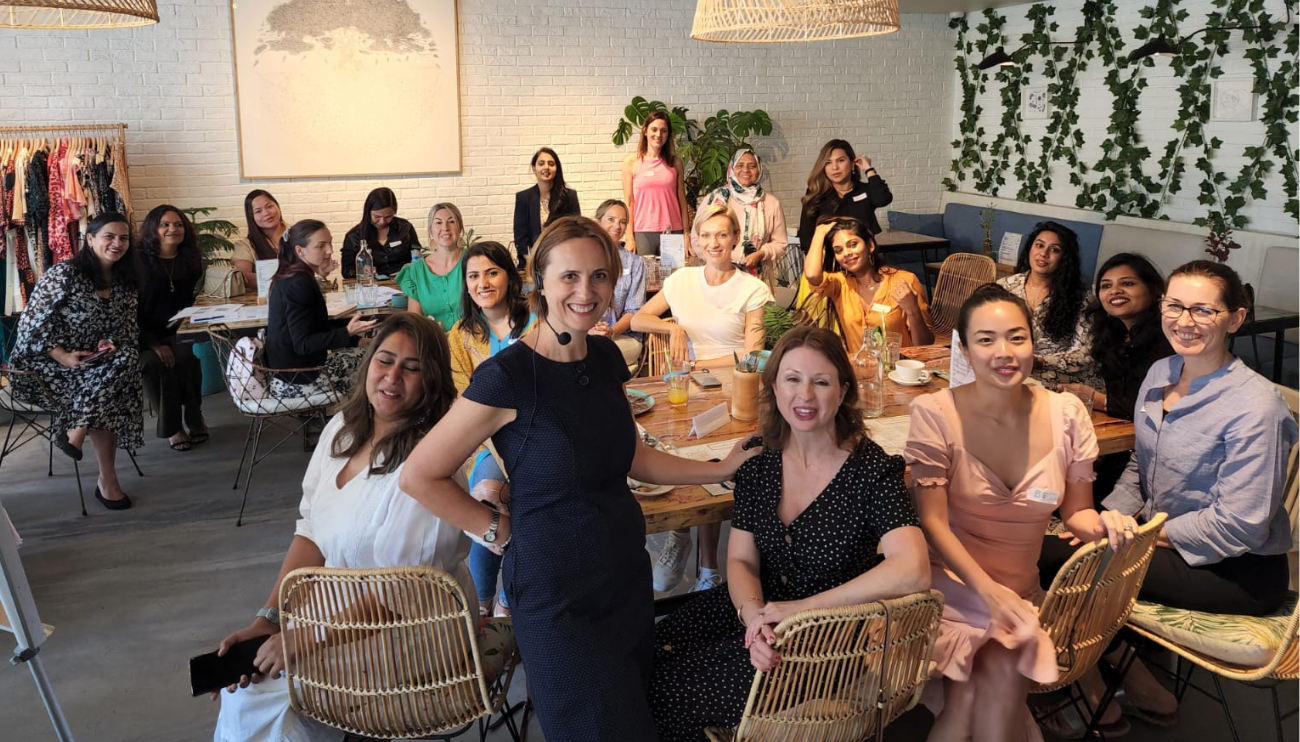
Building a Support System That Lifts You Up
No mom entrepreneur achieves success entirely on her own. Creating a robust support network isn’t just helpful—it’s essential for maintaining a healthy entrepreneurial mindset amid the dual challenges of business and motherhood.
Finding your community
Connecting with other mother entrepreneurs creates a powerful sense of belonging. Seek out specialized groups designed specifically for mompreneurs, both online and offline. These communities offer understanding that general business groups simply cannot provide. Consider joining Facebook groups for working moms [12], local entrepreneurship meetups [13], or specialized platforms like Mamas & Co. where members report finding “a safe place to ask questions and grow” [12].
Asking for help without guilt
Most moms struggle with requesting assistance, believing it signals failure. Remember that help is not a finite resource [14]. The truth? By asking for help, you actually give other women permission to do the same [14]. Be specific about what you need—whether it’s childcare during a client call or feedback on your website. Your job is simply to ask; their job is to decide if they can help [14].
Mentorship and peer support
Research shows that 87% of mentors and mentees feel empowered by their relationships, developing greater confidence as a result [15]. Finding the right mentor—someone experienced in your industry or who has successfully balanced entrepreneurship with motherhood—can transform your business journey [13]. Additionally, peer accountability groups have proven remarkably effective in keeping solo entrepreneurs on track and making consistent progress [12].
Conclusion
Embracing an entrepreneurial mindset while raising children remains one of the most challenging journeys a woman can undertake. The struggle with imposter syndrome, though incredibly common, doesn’t have to define your business path. Remember that these feelings of self-doubt hit mompreneurs especially hard because of the unique balancing act we perform daily, compounded by the invisible emotional labor that follows us everywhere.
Social media certainly intensifies these feelings through carefully curated images that show only the highlight reels of other entrepreneurs’ lives. This constant exposure to seemingly perfect business owners creates a distorted reality that undermines your confidence. However, behind those polished posts lies the same messy reality you experience.
Your mindset shifts hold tremendous power to transform your relationship with imposter syndrome. Rather than aiming to eliminate self-doubt completely, focus on recognizing your unique qualifications, taking imperfect action, and celebrating small wins along the way. These small adjustments gradually build the mental resilience needed to thrive despite occasional doubt.
Unchecked imposter syndrome actively sabotages your business through fear of visibility, missed opportunities, and eventual burnout. Therefore, addressing these feelings becomes not just personally beneficial but essential for your business growth.
Last but certainly not least, you cannot and should not attempt this journey alone. Find your community of fellow mother entrepreneurs who understand your specific challenges. Ask for help without guilt, seek mentorship, and build accountability partnerships that keep you moving forward.
The entrepreneurial path for mothers will never be entirely free of self-doubt. Nevertheless, with these strategies and a supportive community, you can build a successful business while honoring your role as a mother. Your unique journey, complete with its challenges, equips you with perspectives and strengths that others simply don’t possess. Trust that you belong exactly where you are – imposter syndrome and all.
References
[1] – https://www.bbc.com/worklife/article/20210518-the-hidden-load-how-thinking-of-everything-holds-mums-back[2] – https://cflambton.com/the-invisible-load-how-emotional-labor-shows-up-in-entrepreneurship/
[3] – https://www.psychologytoday.com/us/blog/shouldstorm/201910/do-you-have-mompostor-syndrome
[4] – https://www.mother.ly/health-wellness/mental-health/momfluencers-and-mental-health-anxiety/
[5] – https://link.springer.com/article/10.1007/s44202-024-00261-z
[6] – https://www.realhappymom.com/comparing-yourself-to-other-moms/
[7] – https://www.businessinsider.com/entrepreneur-mental-health-social-media-instagram-tiktok-2022-1
[8] – https://www.readynestcounseling.com/post/how-social-media-comparison-affects-the-mental-health-of-moms
[9] – https://www.lovewhatmatters.com/how-celebrating-small-wins-made-me-a-happier-mom/
[10] – https://eonetwork.org/blog/why-sharing-your-authentic-story-is-the-most-powerful-leadership-tool-you-have/
[11] – https://leadinglady-coaching.com/celebrating-success-turn-small-wins-into-massive-growth/
[12] – https://www.mamasandco.com/join-today
[13] – https://orielipo.com/building-strong-support-networks-for-mompreneurs-keys-to-startup-success/
[14] – https://www.themothernurture.com/blog/2025/6/4/how-to-ask-for-help-as-a-working-mom
[15] – https://www.forbes.com/sites/jenniferpalumbo/2025/03/13/mompreneurs-how-to-help-others-succeed-with-these-five-strategies/
Recent Comments